Televiewer Training For Lesotho’s Polihali Tunnel Boring Project
In the heart of Lesotho’s rugged highlands, a massive tunnel boring project is underway to connect two critical dam water sites—Katse and Polihali—via a 15-meter-wide tunnel. This ambitious infrastructure is key to supplying water to South Africa’s hubs, Johannesburg and Pretoria, and relies on geophysical borehole televiewer data as both sides of the tunnel (Katse and Polihali) are advancing drilling simultaneously.
Recently, Mount Sopris Instruments was on-site to deliver hands-on training in borehole imaging for KKM JV who is managing the tunnel. Over four days, we trained a team of engineers and technicians to operate and interpret data from the QL40-ABI-2G (Acoustic Borehole Imager) and QL40-OBI-2G (Optical Borehole Imager) tools, conduct successful borehole surveys, and process results in WellCAD software.
MSI Arrives to Katse
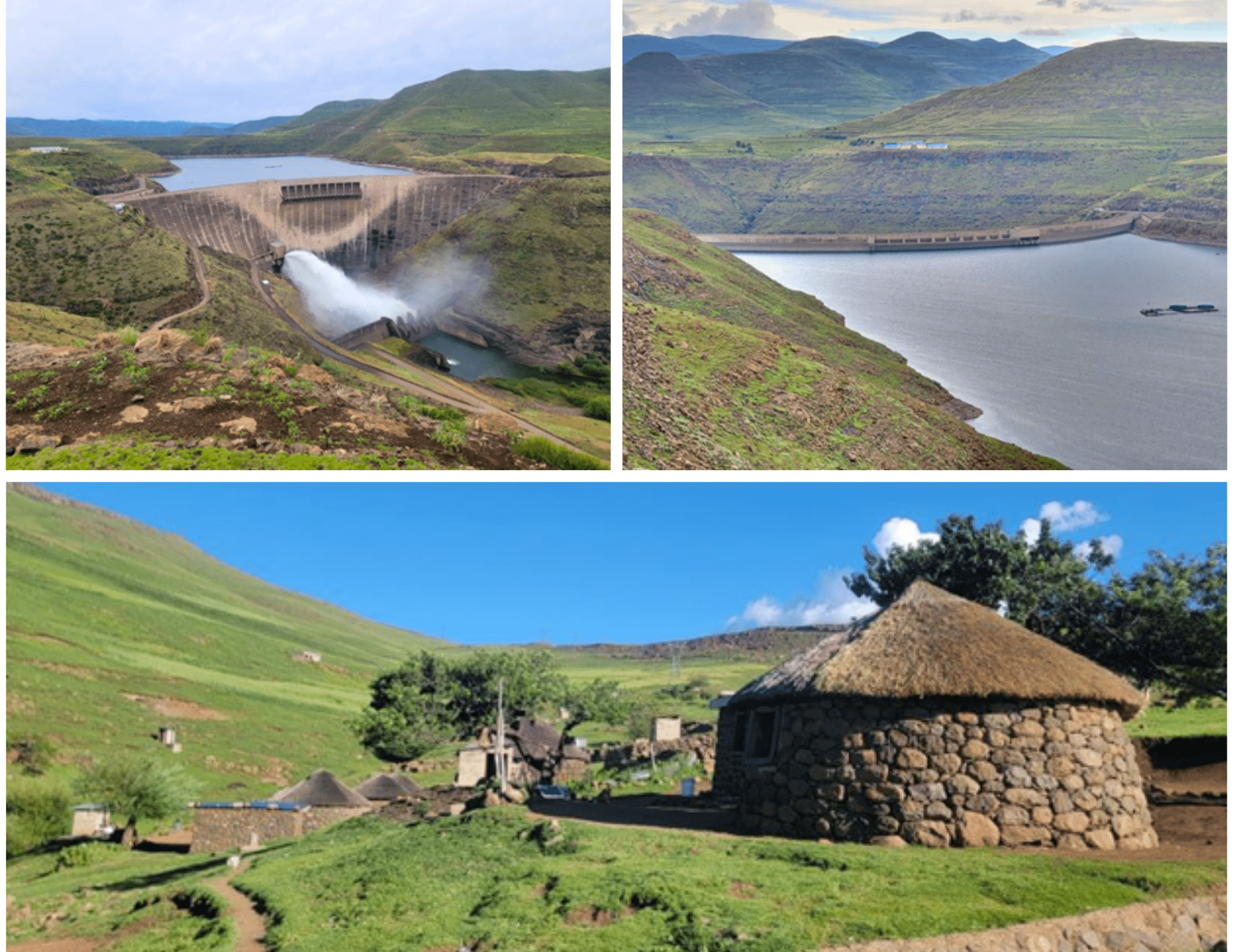
Reaching the remote Katse village took a nine-hour drive from Johannesburg airport. Nestled in Lesotho’s breathtaking highlands, Katse is a green and mountainous region, with a deep cultural heritage and simple, traditional living. Our team stayed at the Bruvei Guest House.
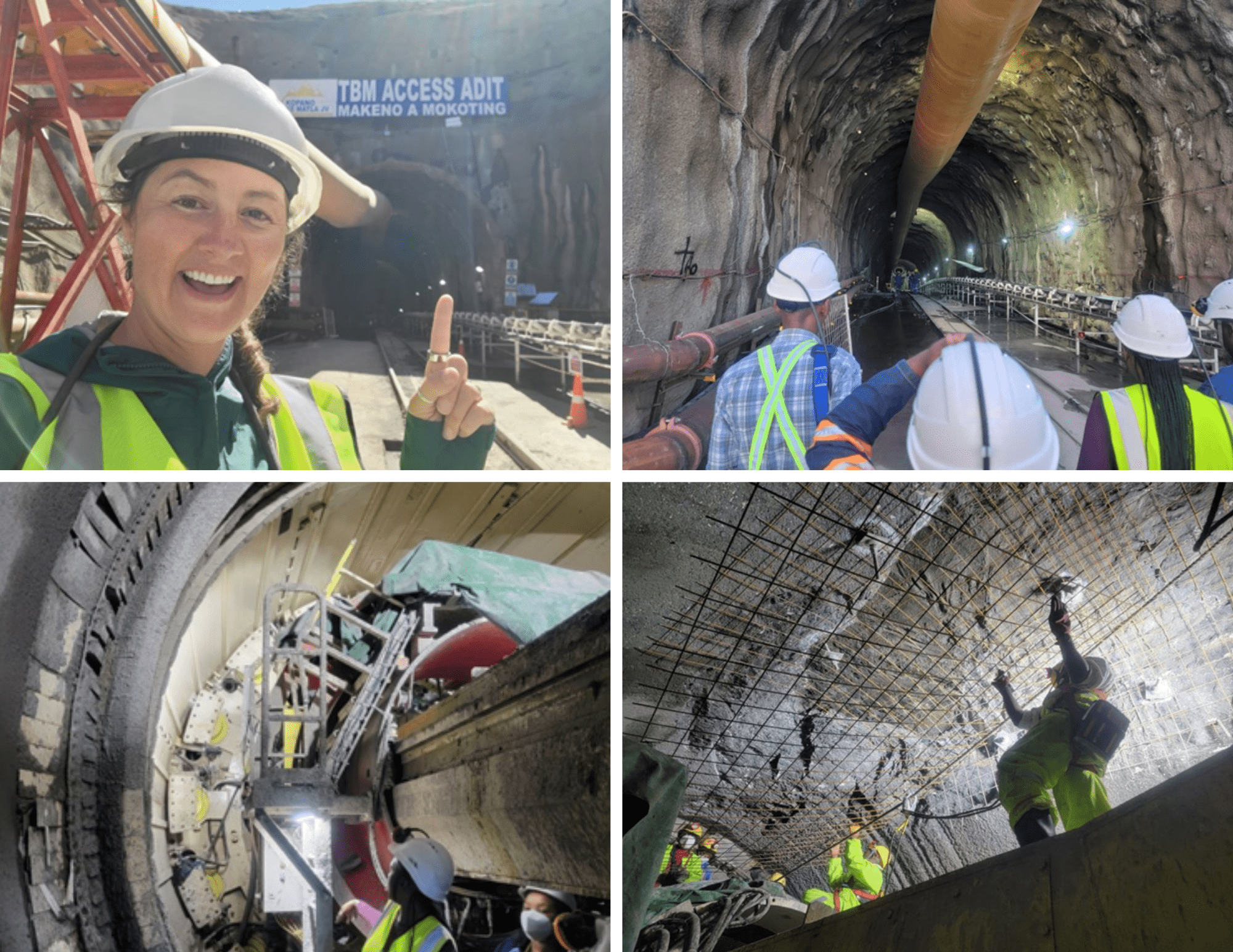
The tunnel, still under construction by tunnel boring machine (TBM), is being drilled from both ends simultaneously. It features horizontal boreholes drilled directly ahead of the TBM through what’s known as the "shield wall" and "face", with additional vertical and angled holes being drilled regionally and off the main shaft for additional geotechnical data.
While boreholes were originally planned to be drilled to 250 m depths, practical constraints have limited the in-tunnel holes to 60 m and regional vertical boreholes to about 100 m. All holes are NQ diameter (75 mm or 2.95 in), through very hard basalt formations with different flows and occasional dolomite. Surprisingly, months-old holes remain open without casing, a testament to the stable rock conditions.
Day 1: Tool Training & Testing
The first day of training was spent indoors at the office, testing the ABI and OBI equipment. Though the team had already used the OBI following a prior online training session, they needed hands-on support with ABI operations. One of the OBI units presented an issue: its QL40-GO4 probe top had been overtightened, damaging both the tool and probe threads. This underlined an important best practice:
- Always hand-tighten probe tops—never use tools. Inspect O-rings regularly for cracks and ensure they’re lightly greased to maintain watertight integrity.
We tested all remaining televiewer tools, connecting each to the Logger software and walking through setup and configuration.
- To simulate a borehole for the ABI, we used a bucket of water—this is a simple, but effective way to conduct testing.
Day 2: Field Training in Two Boreholes
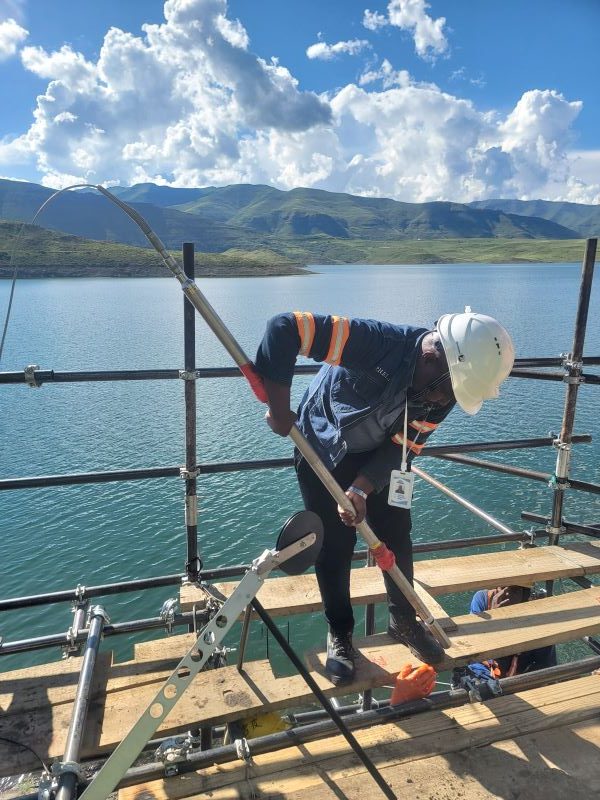
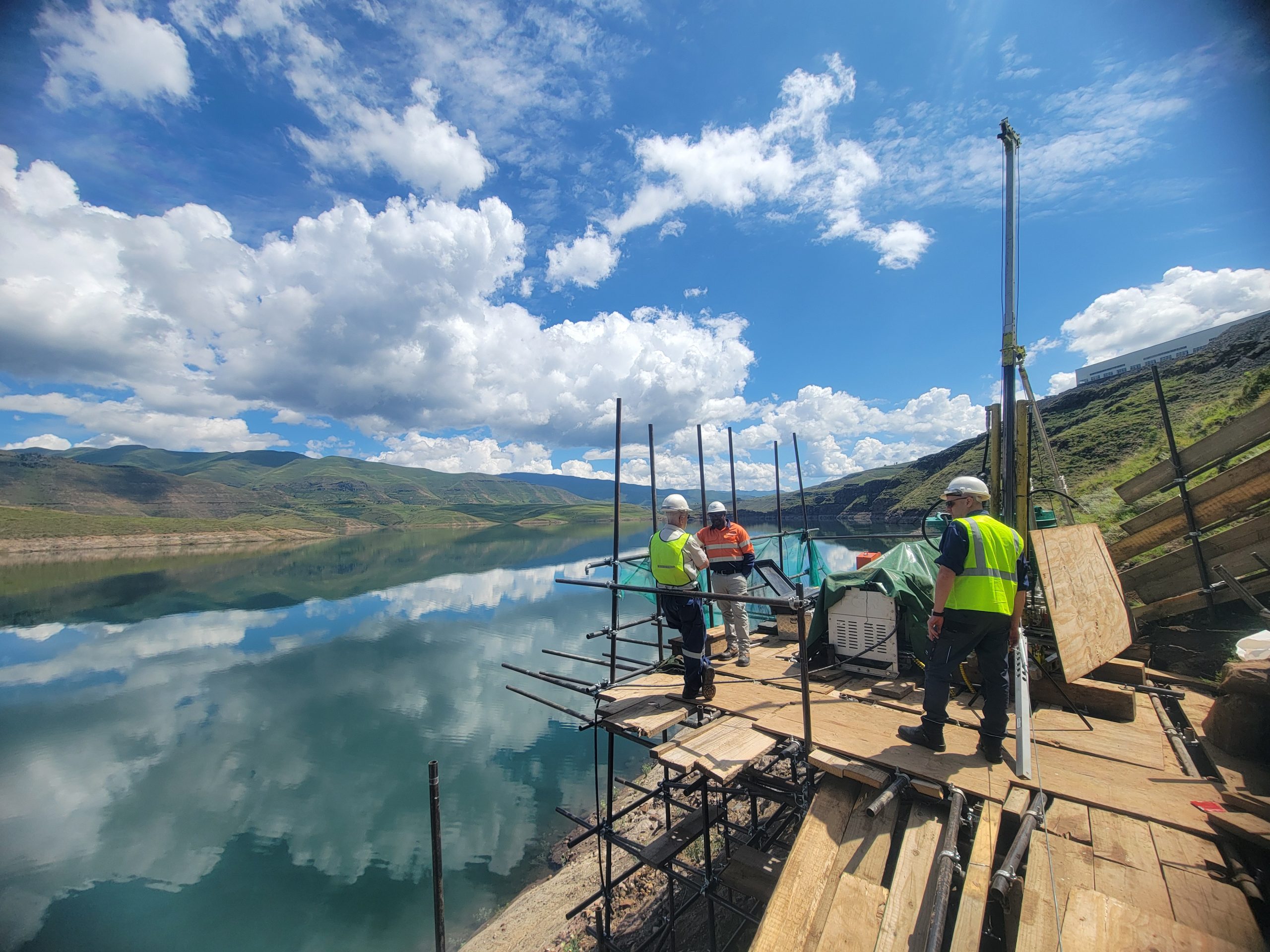
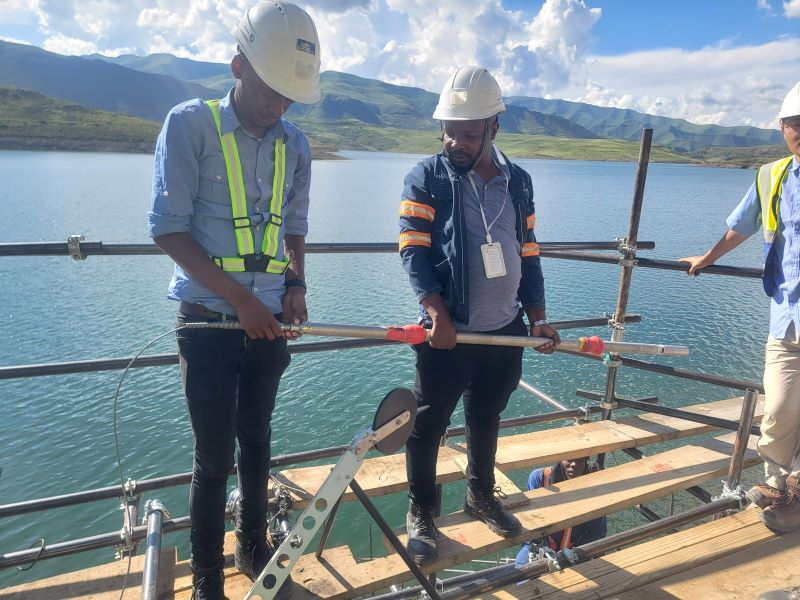
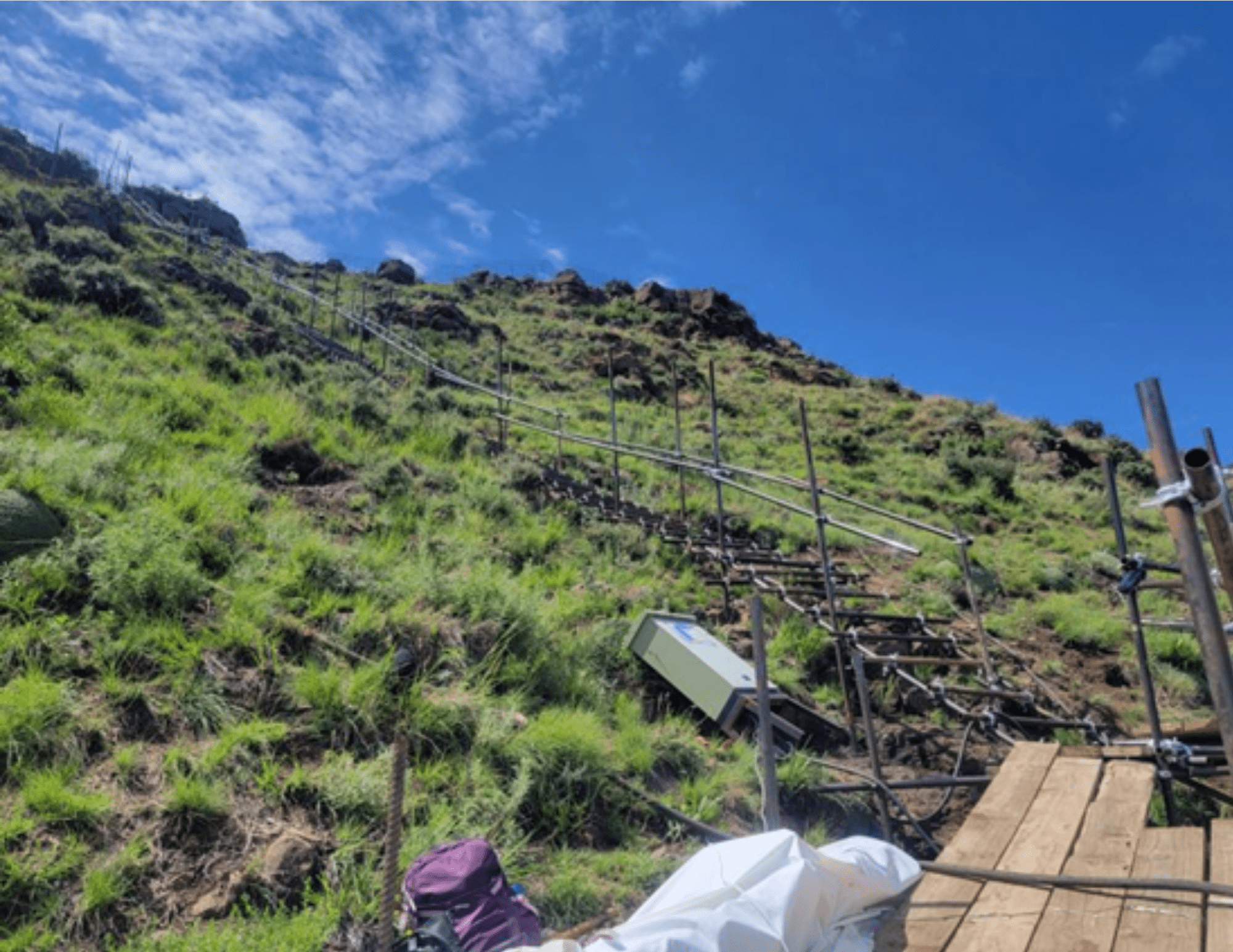
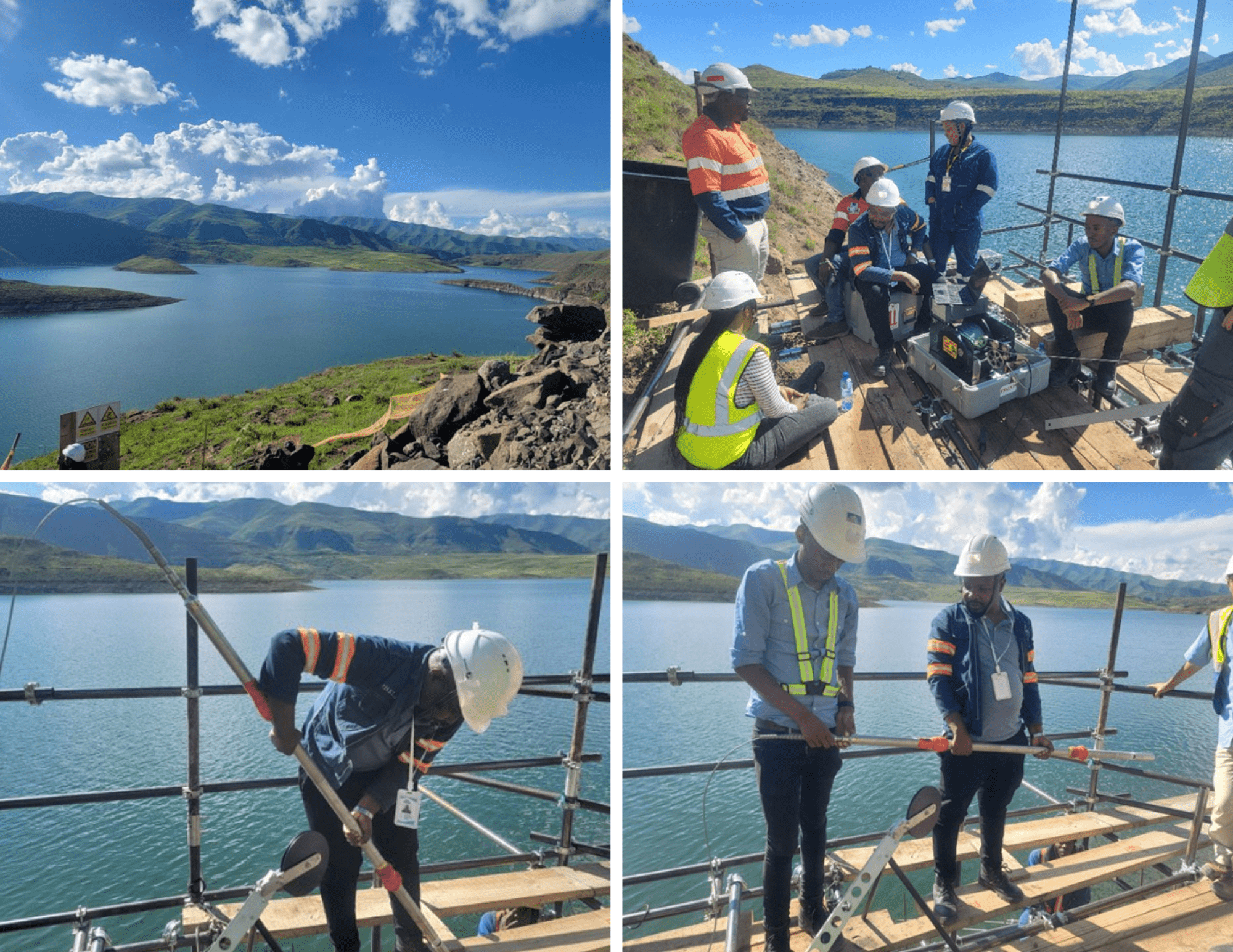
The second day took us into the field to log two boreholes, 90 m and 63 m deep. Access to the boreholes was challenging. The team climbed a long steep slope ladder with pipes down to two platforms at the bottom of the dammed lake.
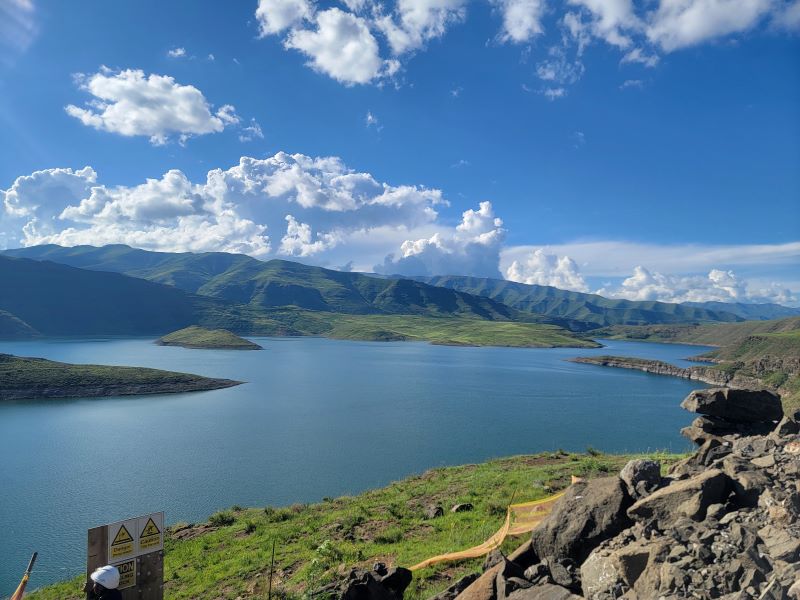
Despite never having used the dummy probes before—due to the remarkably solid rock—the team agreed to run one first. The dummy probe encountered no issues so then the team logged the 90 m borehole with the OPTV Optical Televiewer. The results were excellent: high-quality imagery down and up, even beyond the water level at 8 m.
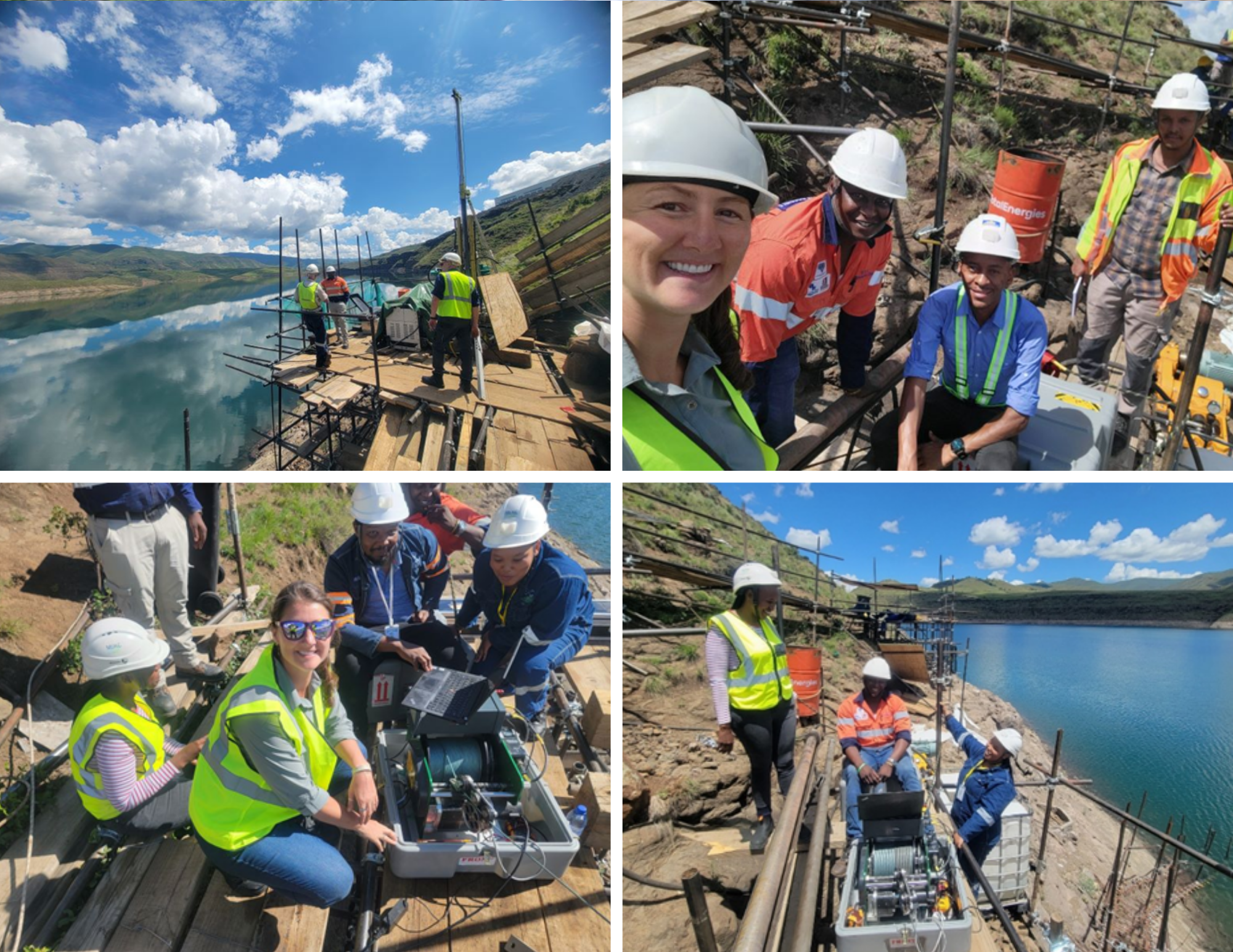
Switching to the ATV acoustic televiewer, things became more challenging. At around 37 m, the tool encountered some obstruction and tension of the wireline slackened. The team pulled and dropped the tool so it could pass the obstruction. After logging down another 2 m, the tension slackened again and attempts to move the tool failed—it was stuck.
A small fractured zone visible in the OBI data at 37 m indicated a stone had likely become wedged against the televiewer’s centralizers. It took six people and a two-hour wait for gloves (PPE was in short supply) to finally free the tool with a POP sound. At the surface, it was confirmed that a rock lodged against the side of the tool but it was easily removed from the electrical tape centralizer.
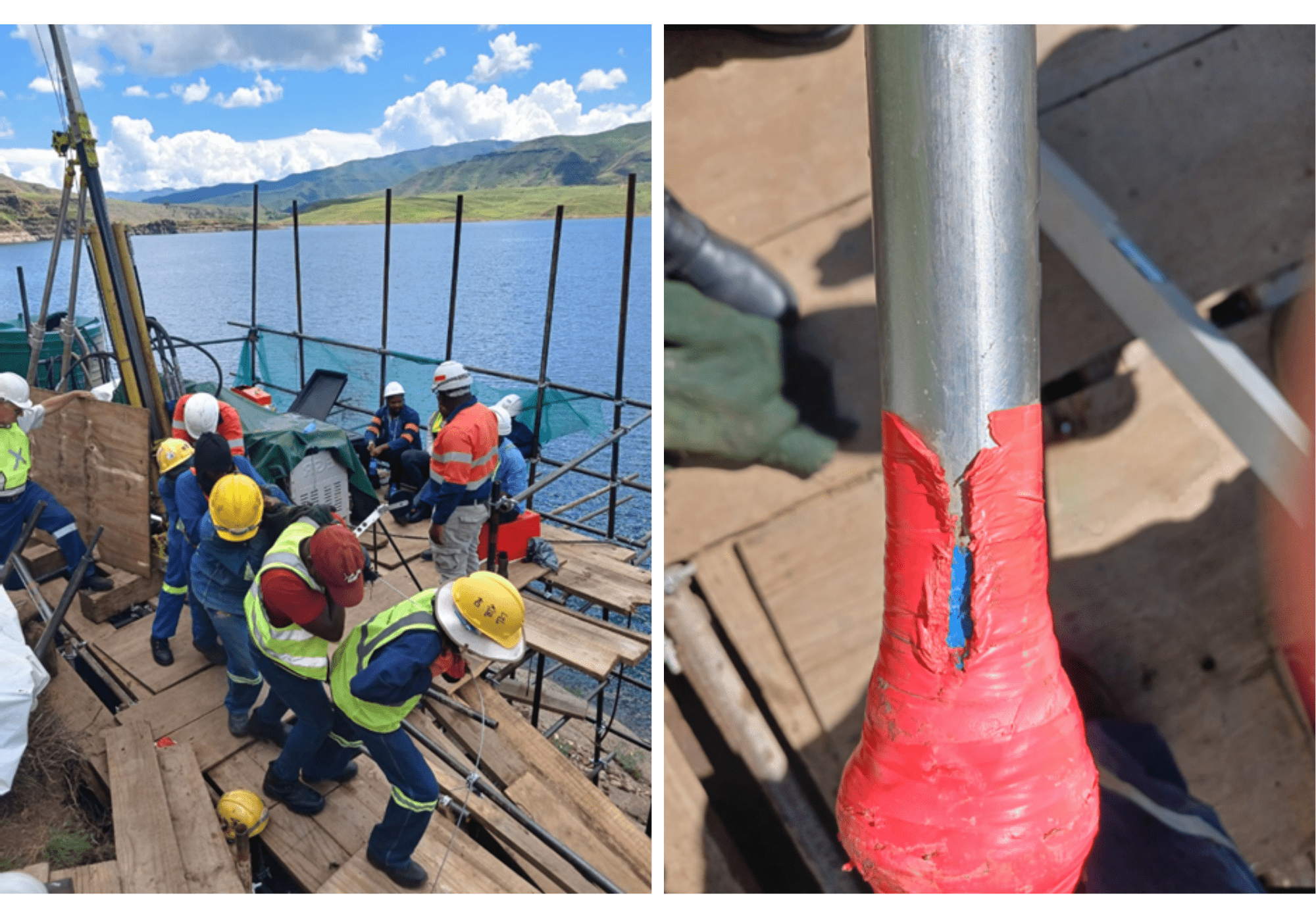
We completed logging the second borehole using the acoustic televiewer alone, with some of the electrical tape centralizer removed as a precaution to avoid a repeat incident. Everything went smoothly in the second borehole, and the team was gaining confidence.
Day 3 & 4: WellCAD Software Training
Back in the office, the next two days were dedicated to data processing and interpretation using WellCAD. The team had two node-locked licenses with the ISI and Deviation modules. We ensured everyone was set up with WellCAD installed, working trial licenses, and shared datasets before walking through:
- Basic data processing
- OBI data interpretation in the ISI Workspace
- Acoustic Caliper processing
- Deviation module workflow
To cap off the week, the team took MSI trainer Lia Martinez to visit the Tunnel Boring Machine machine in the tunnel to see the boreholes they were using for the horizontal surveys through the face/shield plate of the TBM.
Final Thoughts:
Training was more than just technical—it was about real-world field conditions. Whether navigating software, extracting stuck tools, or climbing steep dam walls, the team at KKM-JV are prepared. MSI staff are proud to support projects like this incredible tunnel in Lesotho.