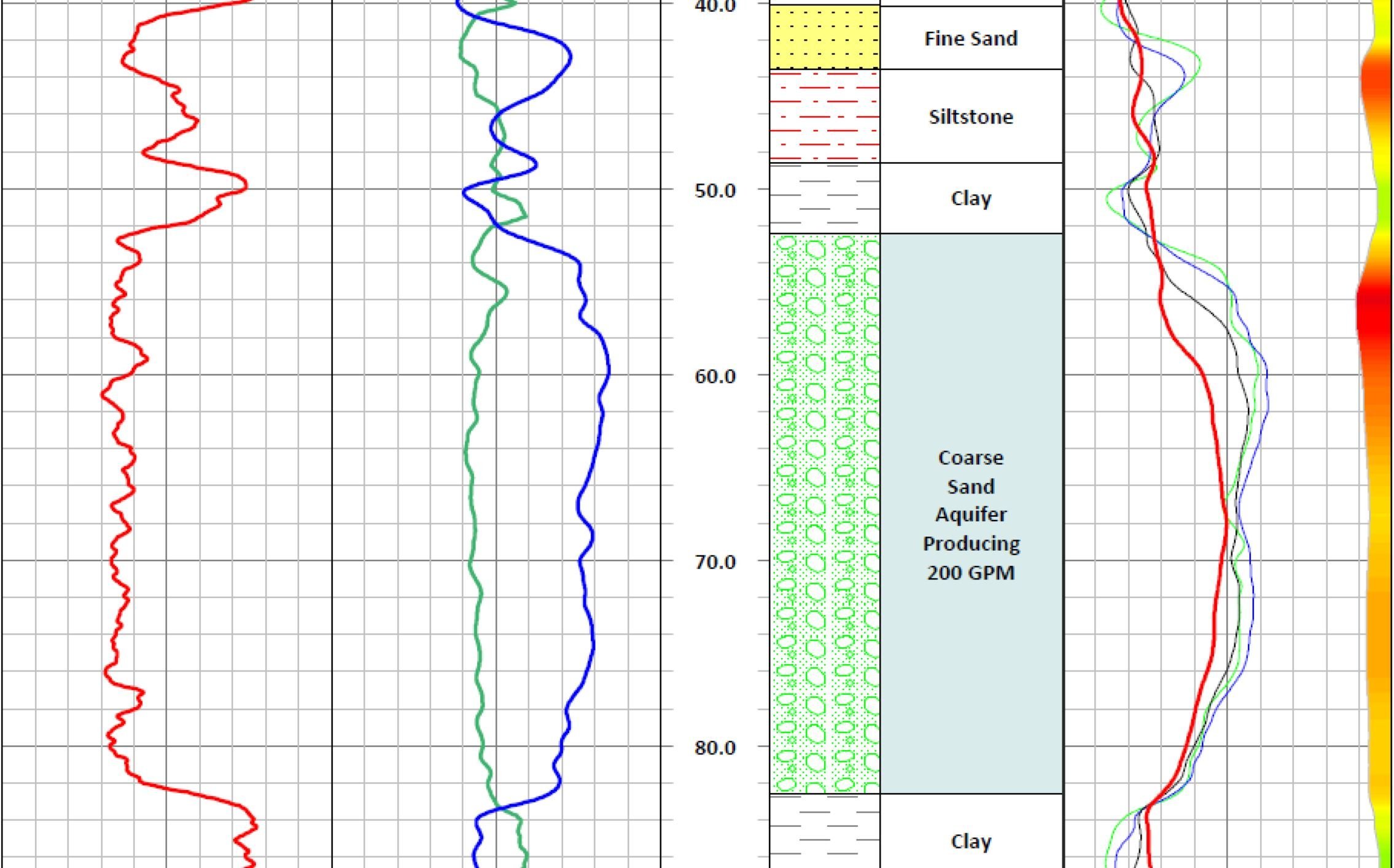
QL40-ELOG
Multipoint Resistivity
4 normal resistivities (8, 16, 32 and 64") and SP/SPR, utilizing isolation bridle
Description
The QL40-ELOG probe measures 8, 16, 32 and 64 inch normal resistivity, single point resistance (SPR) and spontaneous potential (SP).
Using one injection electrode and four measure electrodes, users can log resistivity profiles with different depths of investigation and gain information about permeability, porosity, water quality and geological formation properties.
Four resistivity measurements are recorded compared to two offered by most other manufacturers.
The QL40-ELOG is an inline sub. It can be combined with other logging tools of the QL (Quick Link) product line or operated as a standalone tool.
It is possible to extend the application of the QL40-ELOG to a QL40-IP Induced Polarization probe through a simple firmware upgrade. The QL40-IP configuration also allows recording of the chargeability of the formations.
Applications
- Bed boundary analysis
- Facies changes
- Quantitative geological formation properties
- Identification of hydrostratigraphic units
- Aquifer thickness
- Water quality
- Identification of hydrocarbon intervals
- Detection of ore body zones
Downloads
Technical Specifications
Tool
- Diameter: 43mm (1.7”) with neoprene insulator
- Length: 1.9m (74.8”)
- Weight: 9kg (19.8 lbs)
- Temp: 0 - 70°C (32 - 158°F)
- Max. Pressure: 200bar (2900psi)
Normal Resistivity SP & SPR
- Sensor: stainless steel electrode
- Resistivity range: 0,1 to 100.000 Ohm.m.
- Resistivity accuracy: depends on measurement range
- Below 1% of measured value from 1 to 5.000 Ohm-m
- Below 5% of measured value from 5.000 to 50.000 Ohm-m
- Resistivity resolution: below 0.04% of measured value
- SPR range: 0,1 to 100.000 Ohm
- SP range: ±18V
- SP accuracy: ±2.5mV
- SP Resolution: 0.5mV
Operating Conditions
- Cable type: Mono, multi-conductor, coax (Isolating bridle required)
- Compatibility: Scout Pro / Opal (Scout / Bbox / Matrix)
- Digital data transmission Telemetry: Variable baudrate telemetry according to cable length/type & surface system
- Logging speed: 5-6m/min recommended
- Centralisation: Not required
- Borehole conditions: Fluid-filled boreholes, Open boreholes
Principle of Measurement
An electric current is injected into the formation from the current electrode. Potentials due to this current flow are measured on various measure electrodes on the probe with respect to a voltage-reference electrode located at the top of the isolation bridle. The spacing between the current and individual measure electrodes determine the depth of investigation of the measurement. The voltage measurements are proportional to the resistivity of the formation.
Measurement Features
- 8”, 16”, 32” and 64” Normal Resistivity in Ohm-m
- Spontanous potential (SP) in mV
- Single Point Resistance (SPR) in Ohm