QL40-IP
Induced Polarization
Dual spaced induced polarization (16 and 64"), 4 normal resistivities and SP/SPR, utilizing isolation bridle
Description
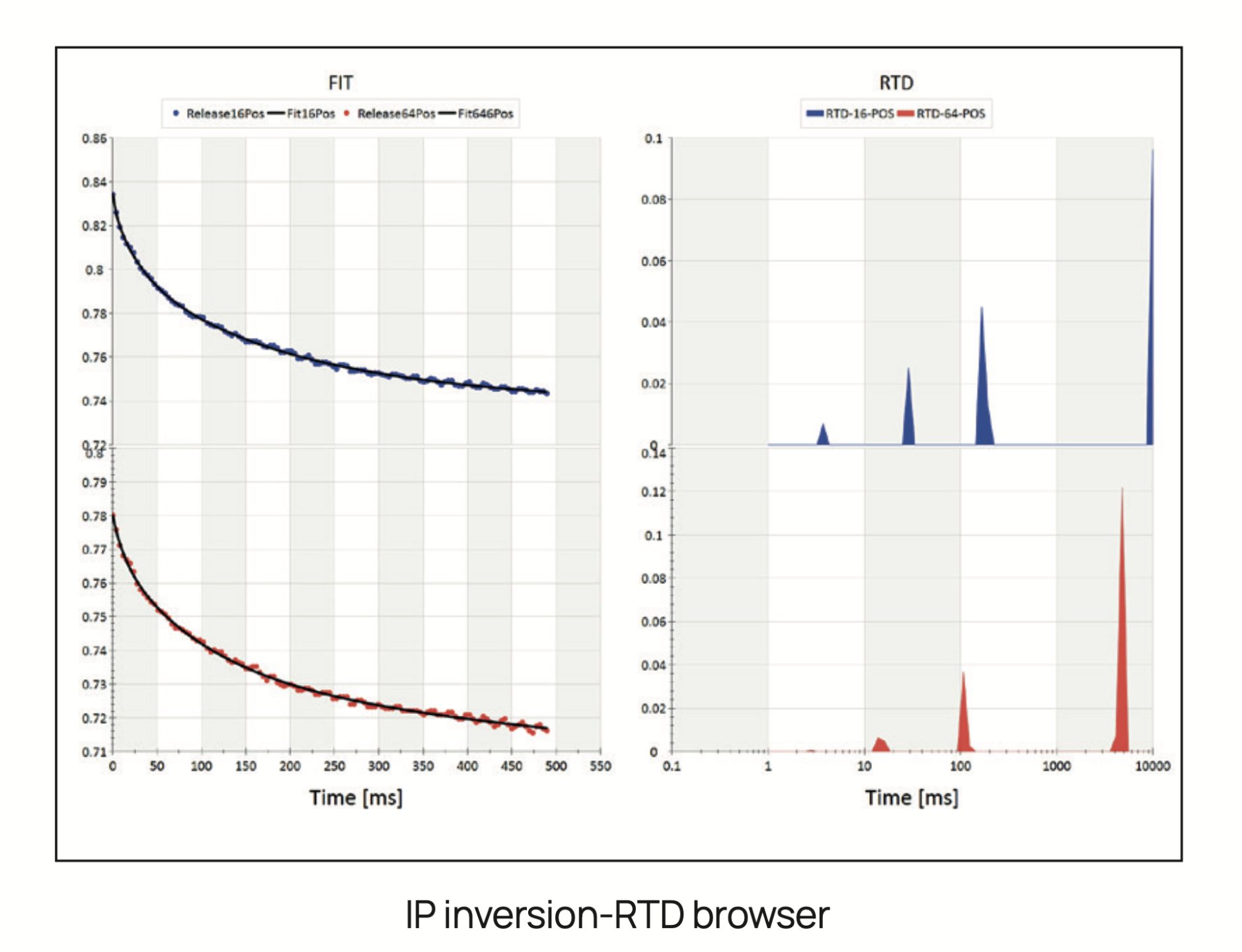
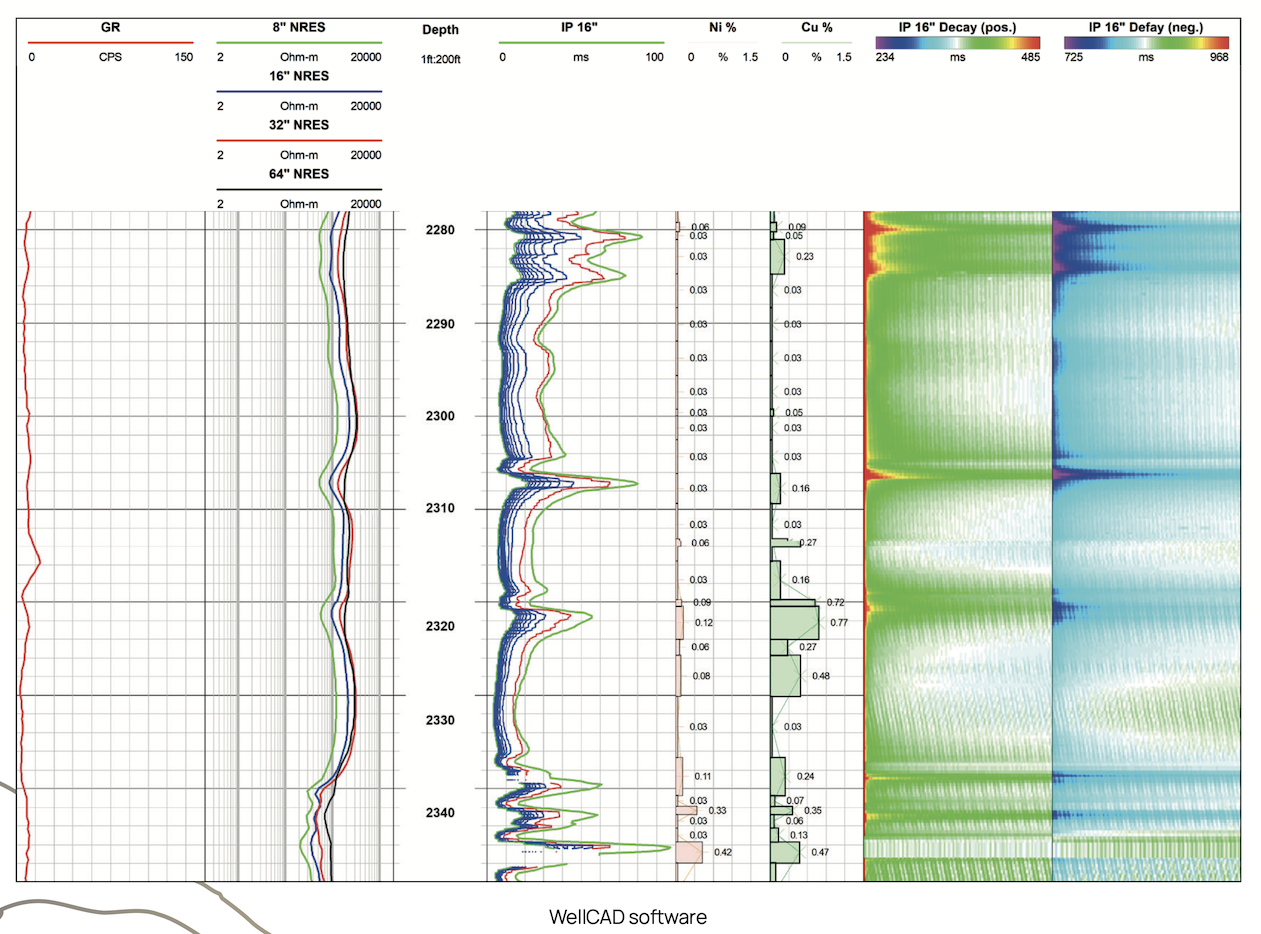
The QL40-IP probe is a combination of a quadruple spacing Normal Resistivity and dual spacing Induced Polarisation probe measuring the electrical resistivity, single point resistance, self potential, chargeability and relaxation time distribution (RTD) of the rocks borehole formation.
A high chargeability response is an indication of the presence of metallic sulphides and oxides or cation-rich clays. When combined with petrophysical analyses, the RTD parameter can be correlated to the mineral grain size distribution and concentration.
The QL40IP is an in-line sub. It can be combined with other logging tools of the QL (Quick Link) product line to build tool strings. It can also be operated as a standalone tool.
Applications
- Detection of disseminated pyrite in sedimentary rocks
- Uranium roll-front deposits which sometimes show higher concentrations of pyrite
- Coal seams to detect pyrite or other ferrous material
- Detection of sulfides in igneous and metamorphic rocks
- Identify montmorillonite clay in sedimentary depositional systems
Downloads
-
QL40-IP Brochure PDF
Technical Specifications
Tool
- Diameter: 43mm (1.7”) with neoprene insulator
- Length: 1.9m (74.8”)
- Weight: 9kg (19.8 lbs)
- Temp: 0 - 70°C (32 - 158°F)
- Max. Pressure: 200bar (2900psi)
Sensors
IP sensor
- Sensor: stainless steel electrode
- Dual Spacing: (16” and 64”)
- Chargeability measured: over 10 time windows per spacing
- Resolution: 1.2 μV
- Input Impedance: 1.4 MOhm
- User defined cycle timing: from 100ms – 4000ms (@ 1ms resolution)
Normal Resistivity & SPR
See QL40-ELOG
Operating Conditions
- Cable type: Mono, multi-conductor, coax; Isolating bridle required
- Compatibility: Scout / Opal (ALTIogger / Bbox / Matrix)
- Digital data transmission Telemetry: Variable baudrate telemetry according to cable length/type & surface system
- Logging speed: depending on IP cycle timing and vertical sampling rate
- Centralisation: Not required
- Borehole conditions: Fluid-filled boreholes
Principle of Measurement
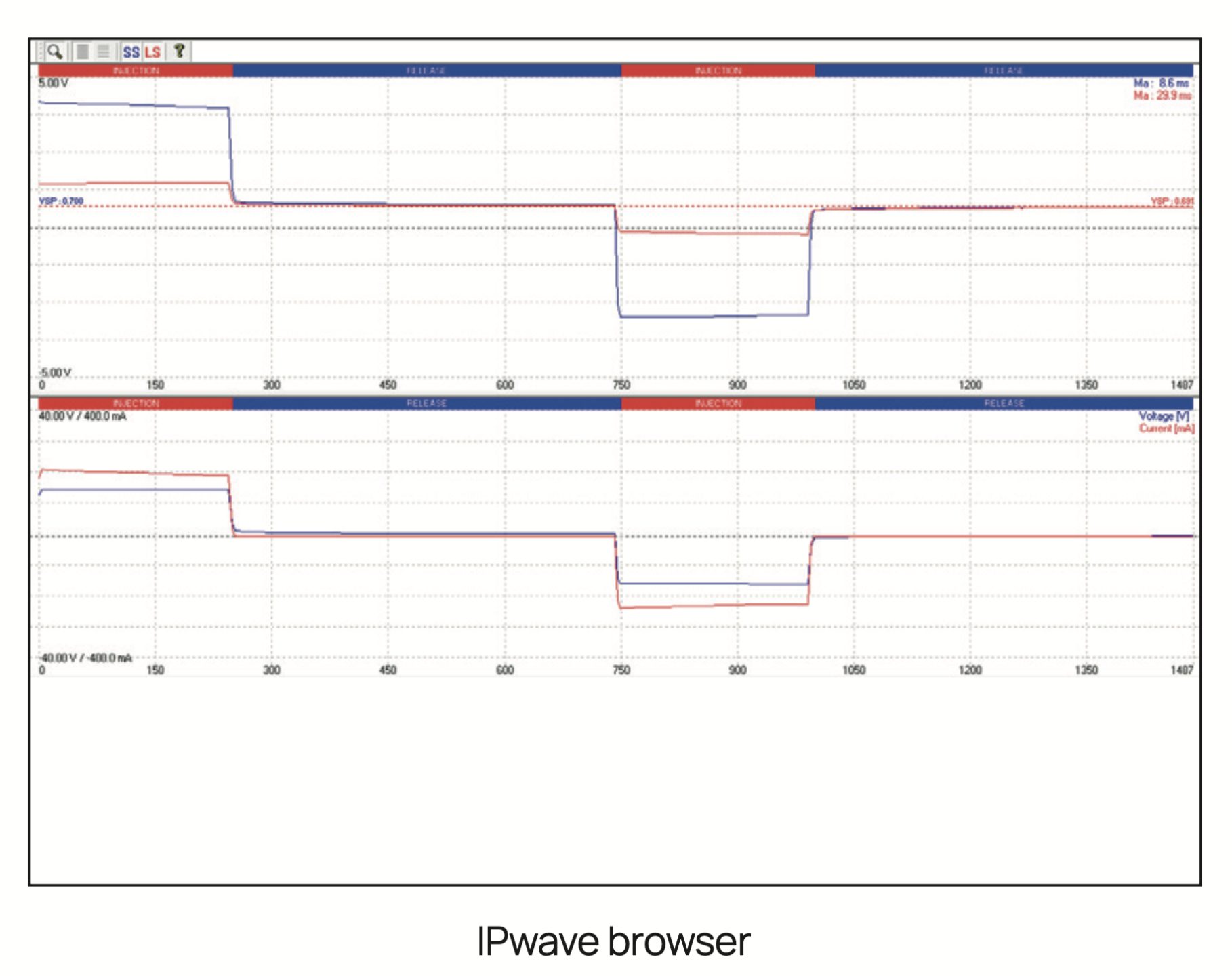
The Induced Polarisation is measured in time mode. An alternating square wave current is injected in the formation and the voltage is measured in parallel. Each measurement consists of a current injection period and a current switch off period which is repeated with opposite polarity. The full waveform of the current and voltage are recorded and displayed. Real time processing of the voltage decay curves yields the IP parameters chargeability and Relaxation Time Distribution (RTD).
In addition, potential measurements at the electrodes are made with reference to a surface electrode "fish." The measurements are converted within the probe into apparent formation resistivity and digitally transmitted to the surface unit. The Spontaneous Potential (SP) is a record of the natural voltages occuring in a borehole. It is measured between the 64” electrode and armor. The Single Point Resistance (SPR) Point resistivity is measured between the bottom current injection electrode and the isolated cable armor above the bridle. The SPR is a qualitative indication of the electrical resistance of the formation material immediately adjacent to the current electrode.
Measurement Features
- Chargeability in ms (measured at the 16” and 64” electrodes)
- Relaxation Time Distribution – RTD (measured at the 16” and 64” electrodes)
- Real time processing and display of the entire time series of the current and voltage
- User defined cycle timing (custom « ON » and « OFF » times for IP measurement)
- Normal resistivity in Ohm.m (measured at the 8”, 16”, 32” and 64” electrodes)
- Single Point Resistance in Ohm
- Spontaneous Potential in mV
Related Products
-
QL40-ELOG Product Page
Multipoint Resistivity
Related Shop Items
-
 QL40-ISQL Shop Item
Isolation Bridle, Mount Sopris QuickLink probe top to QuickLink probe
-
QL40-IS4 Shop Item
Isolation Bridle, Mount Sopris four-conductor probe top to QuickLink probe
-
 17-202-096 Shop Item
Calibration and Test Box for Normal Resistivities, SP, and Induced Polarization