
Hands-On QL40-BMR Training at the University of Iowa
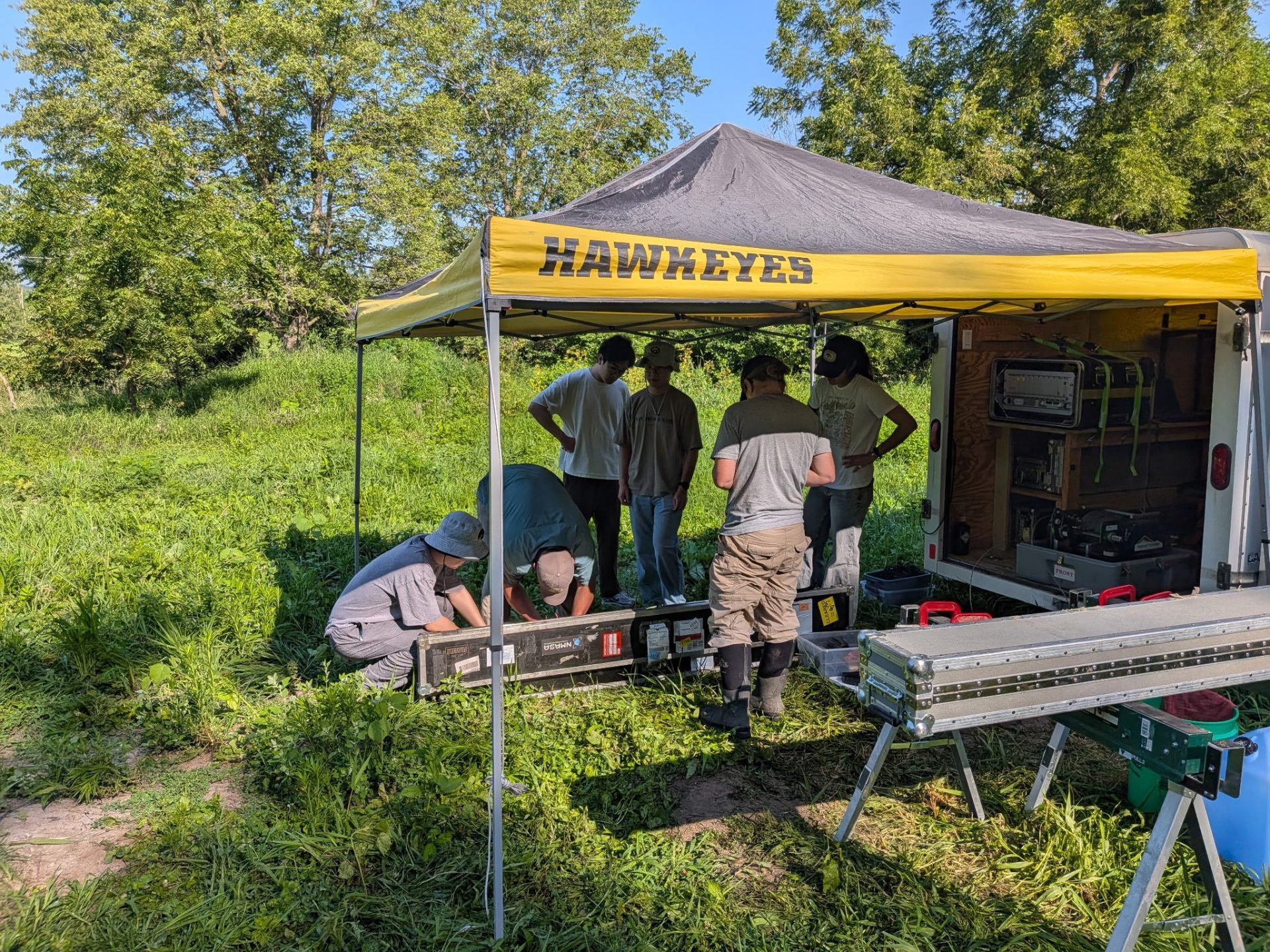 On July 15, 2026, Mount Sopris Instruments provided a hands-on training course focused on the operation and field deployment of the QL40-BMR Borehole Magnetic Resonance (BMR) system for staff and students affiliated with the University of Iowa Department of Geology and the Iowa Geological Survey. The training was attended by six participants and combined classroom instruction with practical field experience.
The primary objective of the training was to familiarize participants with QL40-BMR theory, system setup, deployment procedures, field operation, and logging best practices. Attendees gained experience assembling the tool, conducting pre-deployment checks, acquiring data, and reviewing processing workflows within WellCAD.
Field Demonstration at Kent Park
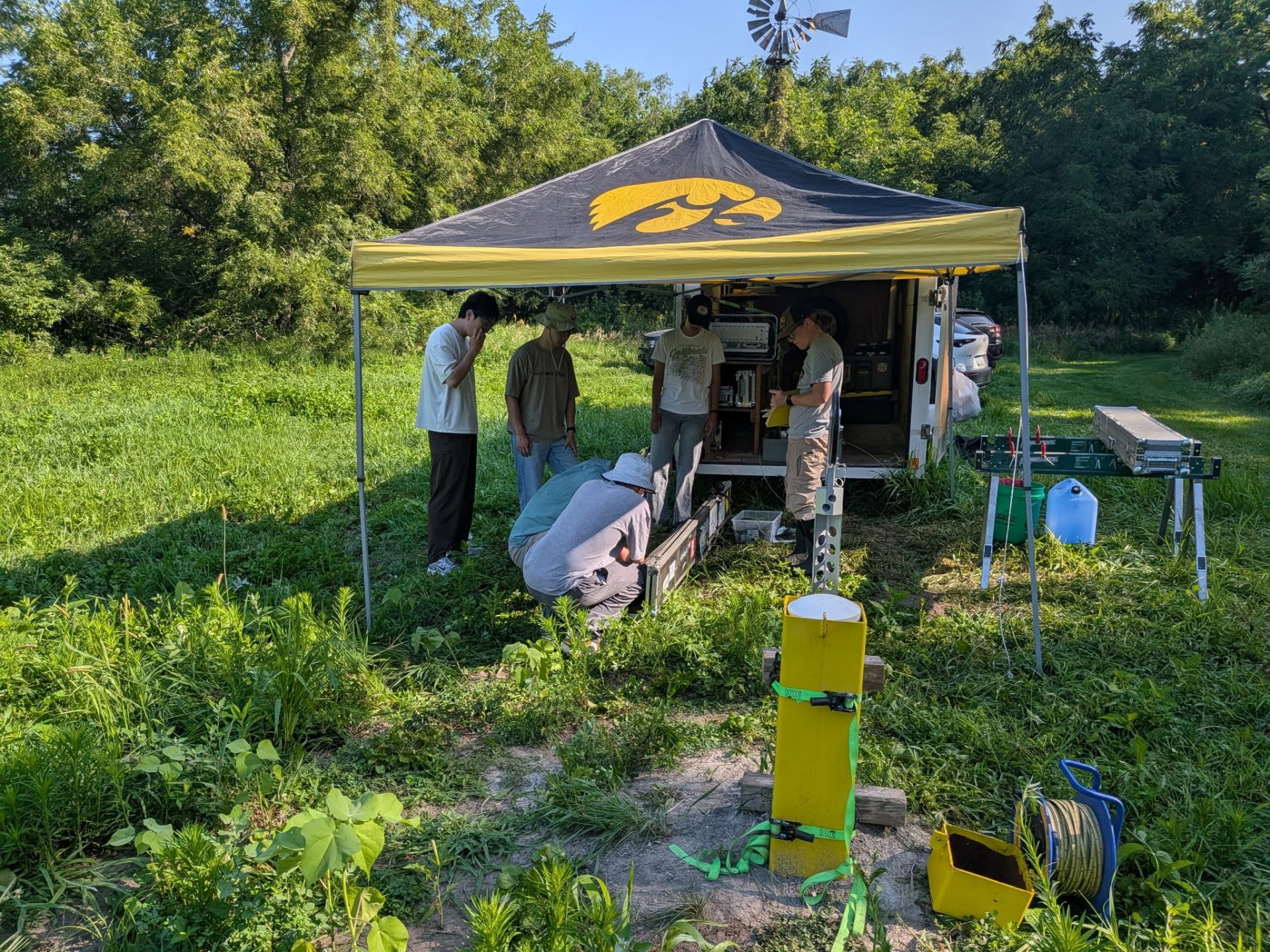
The field portion of the training took place at Kent Park, a Johnson County Conservation area located approximately 20 miles west of Iowa City. The site provided excellent conditions for BMR logging, with minimal sources of electromagnetic interference and no overhead power lines nearby. While temperatures were challenging, with a heat index exceeding 100°F, a shaded canopy over the borehole provided some relief during field operations.
The demonstration borehole was drilled to approximately 580 feet and was cased with 6-inch PVC to a depth of about 400 feet. The static water level was approximately 110 feet below ground surface.
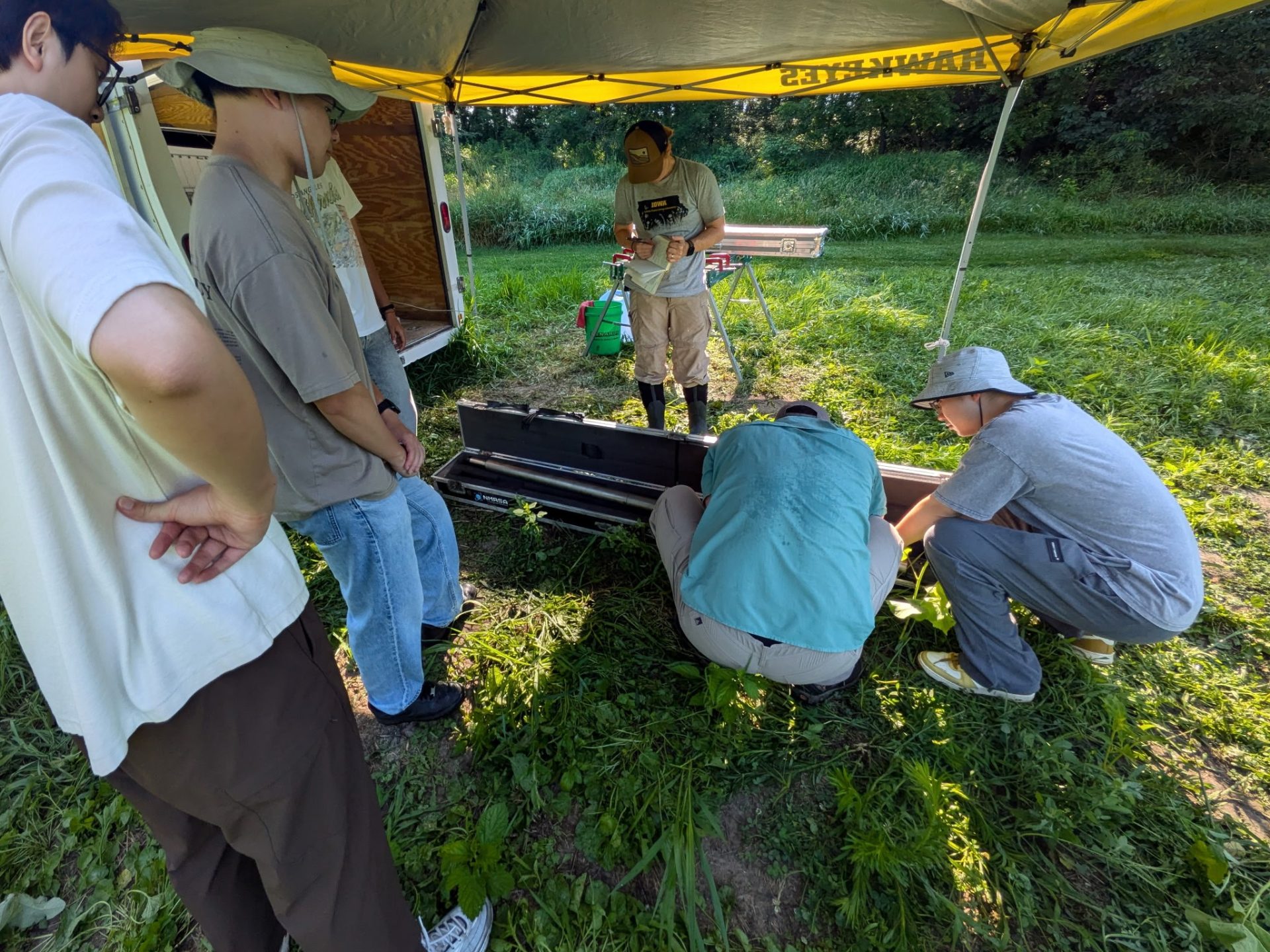
Prior to deployment, the QL40-BMR was assembled with Atom centralizers and standoffs designed for PVC-cased environments. Participants worked through the complete setup procedure, including surface testing of the system to verify functionality before deployment. The tool was then lowered into the borehole using a standard tripod system. During the descent, the transmitter was activated and allowed to warm up in preparation for data acquisition.
Data Acquisition and Results
As recommended, data acquisition was performed during the upward logging pass using appropriate vertical sampling intervals and logging speeds. The site conditions proved ideal for BMR measurements, resulting in exceptionally clean data and low noise levels throughout the survey.
Several key observations were highlighted during the demonstration:
- Environmental noise levels remained very low due to the remote location and favorable site conditions.
- The water column further reduced electromagnetic interference, improving overall signal quality by attenuating EM noise from the environment.
- The QL40-BMR produced excellent results through the PVC-cased section when properly centralized and operated within the tool’s diameter of investigation (DOI).
- Maintaining consistent logging speeds improved data quality and contributed to a very low error rate, with only approximately 12 data errors recorded across more than 2,000 data points (<1%).
The successful survey provided participants with a clear understanding of how proper deployment techniques and site conditions contribute to high-quality BMR data acquisition.
WellCAD Basic & NMR Processing Introduction
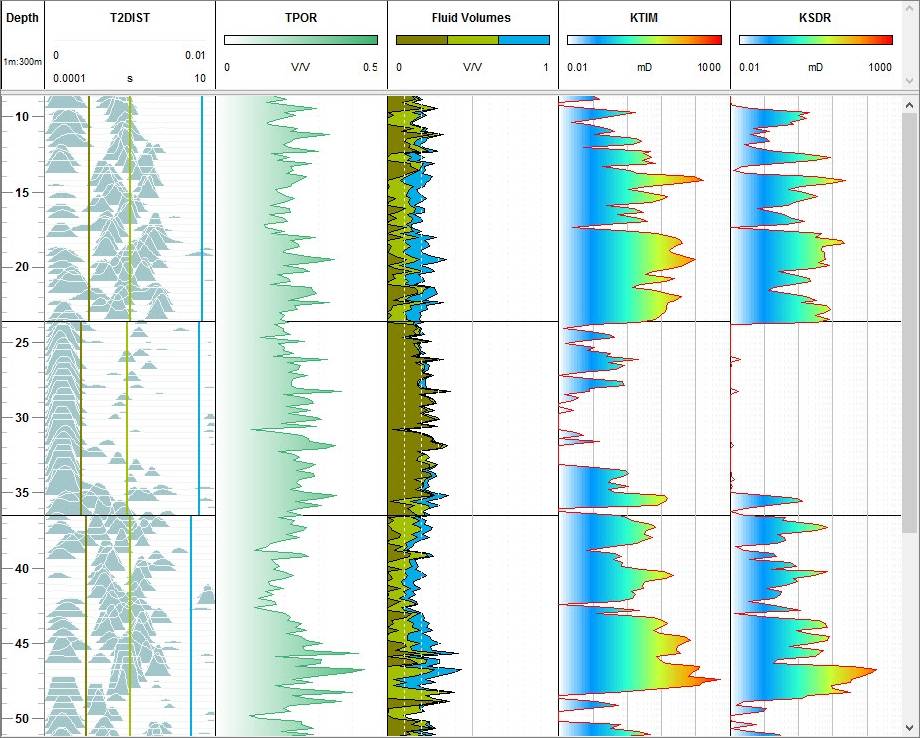
Following the field exercise, the group moved indoors for an introduction to the NMR and NMRSA Processing modules within WellCAD. Participants learned the fundamentals of processing and interpreting borehole magnetic resonance data, including workflows for evaluating porosity and formation properties.
- The NMR workspace allows real-time computation of total porosity, fluid volumes and permeability.
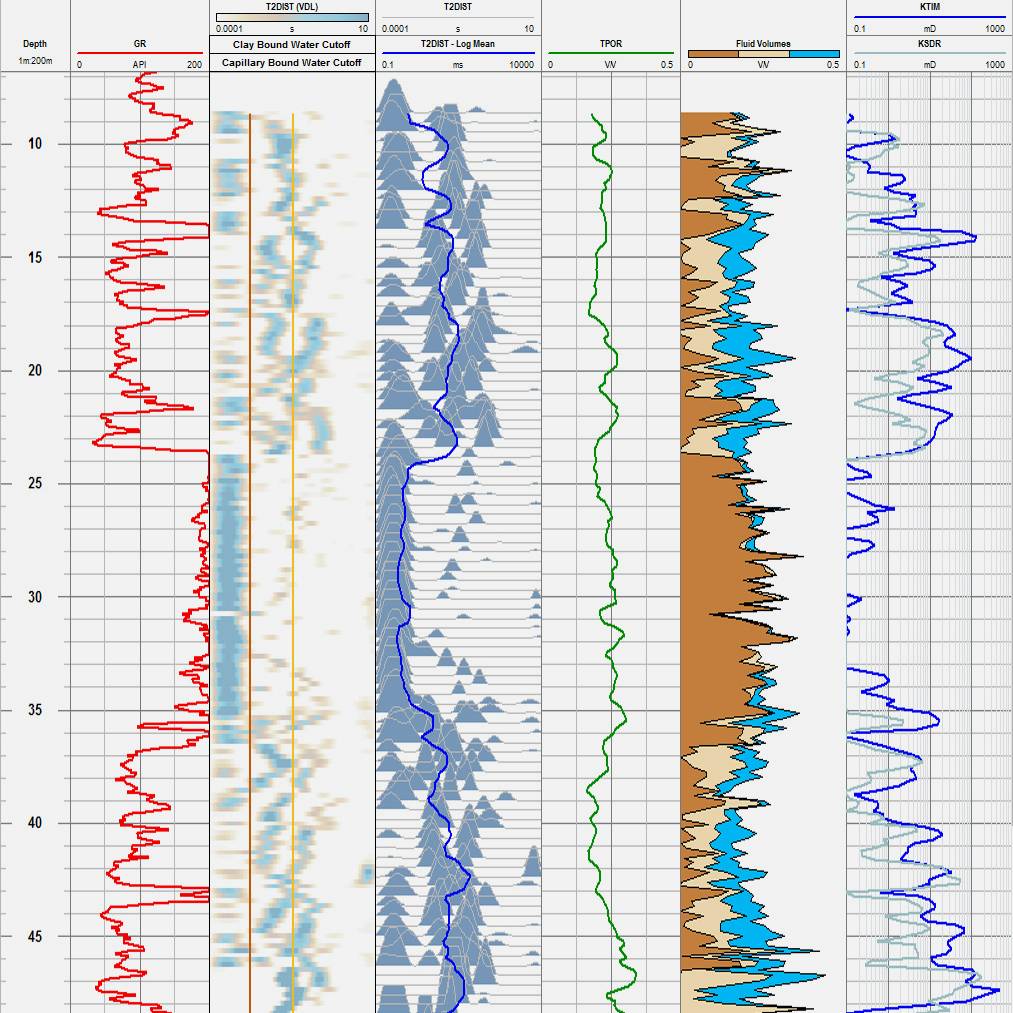
- The NMR workspace allows real-time computation of total porosity, fluid volumes and permeability.The NMR workspace allows zonation and application of individually adjusted T2 cut-off values.
The training generated significant enthusiasm among attendees, particularly regarding the ability of the QL40-BMR to directly measure porosity behind PVC casing—an important capability for groundwater and hydrogeologic investigations. The group was impressed by the quality of the acquired data and eager to begin applying the technology to their own projects.
We would like to thank the University of Iowa and the Iowa Geological Survey for hosting the training and look forward to supporting their future borehole magnetic resonance logging initiatives.