QL40-GR
Natural Gamma
Amount of gamma radiation occurring naturally within formations
Description
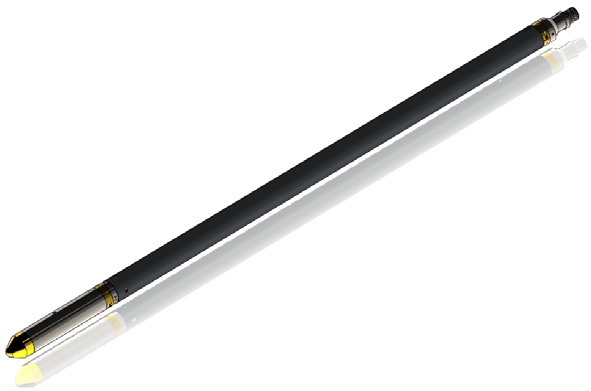
The QL40-GR probe measures the amount of gamma radiations occurring naturally from within the formations crossed by a borehole.
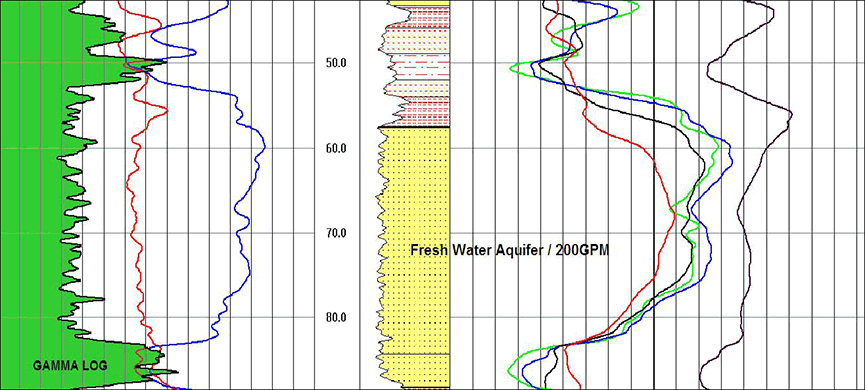
A scintillation Sodium Iodide crystal is used to detect the gamma rays. Gamma rays are produced mainly by isotopes of potassium, thorium, uranium and their decay products. The gamma ray log is widely used in the mining and oil industry for the identification of lithology, correlation between boreholes and clay content analyses.
The QL40-GR is supplied as an inline sub. It can be combined with other logging tools of the QL product line or it can be operated as a standalone tool. It is compatible with ALT/MSI acquisition systems.
Applications
- Borehole correlations
- Lithology characterization
- Clay content analyses
- Well completion evaluation
- Sedimentary analyses
- Mineral exploration
- Contamination studies
Downloads
-
QL40-GR Brochure PDF
-
QL40-GR Manual PDF
Technical Specifications
Tool
- Diameter: 40mm (1.57”) 42.3mm (1.66”) with neoprene sleeve
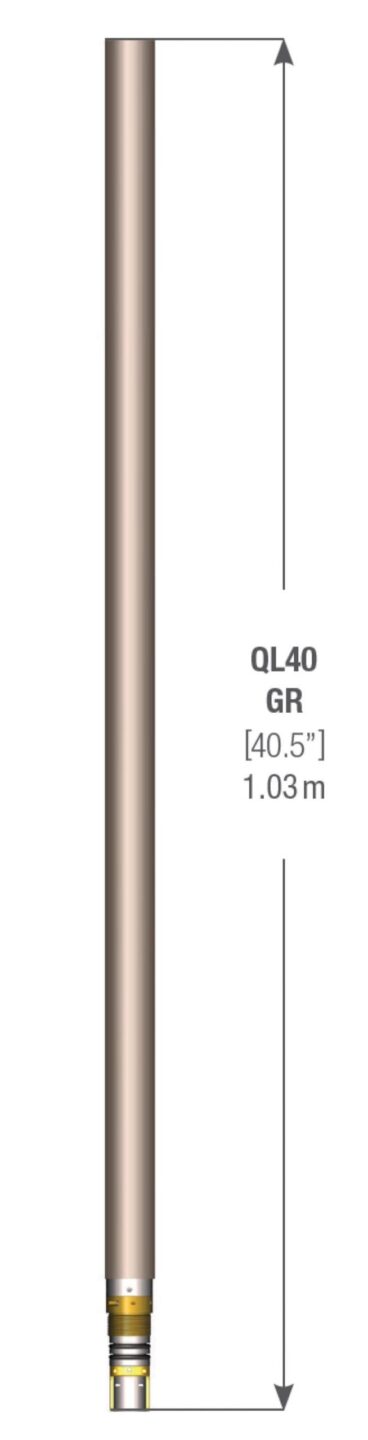
- Length: 1.03m (40.5” )
- Weight: 4.67kg (10.3 lbs)
- Max. Temp: 70°C (158 °F)
- Max. Pressure: 200 bar (2900 psi)
Sensor
- Scintillation NaI(Tl) crystal: 2.22cm x 7.62cm (0.875” x 3.00”)
Operating conditions
- Cable type: Mono, multi-conductor, coax
- Compatibility: Scout Pro / Opal (Scout / Bbox / Matrix)
- Digital data transmission Telemetry: Variable baudrate telemetry according to cable length/type & surface system
- Logging speed: Variable
- Centralisation: Not required
- Borehole conditions: Dry or fluid-filled borehole Open or cased borehole
Principle of measurement
The QL40-GR tool is equipped with a scintillation Thallium doped Sodium Iodide crystal - NaI(Tl), a material which when struck by gamma rays emits pulses of light. These pulses of light are amplified by a photomultiplier tube and are then converted into electrical pulses. The number of pulses are counted during a sampled time interval at the investigation depth, the result is then digitised and transmitted up the wireline to the surface acquisition system.
Measurements feature
Total gamma counts in CPS or in API unit