32GR
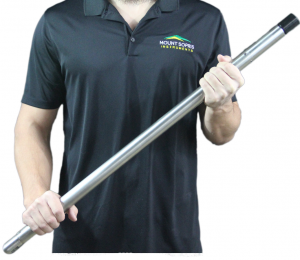
Slim natural gamma probe
Digital slim gamma logging probe
Description
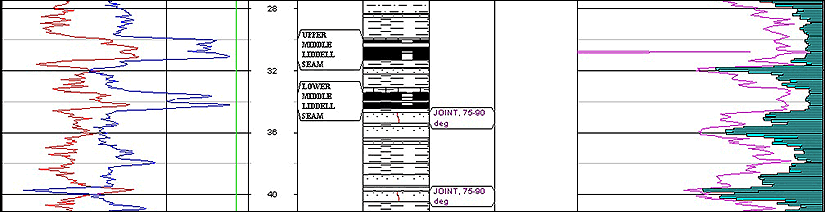
The 32GR probe measures the amount of gamma radiation occurring naturally within the formations crossed by a borehole. Gamma rays are produced mainly by isotopes of potassium, thorium, and uranium. This probe can be used for standard gamma logging (lithology, correlation, grain size estimation), uranium exploration logging (k-factors and dead time provided), and non-destructive cement pile testing (when configured as a 4-pi omni-directional gamma-gamma density tool).
Calibration to API units is available.
The 32GR runs on any conventional wirelines mono or multiconductor. The tool can be supplied with a MSI or GO4 probe tops.
Applications
- Bed boundary analysis
- Aquifer Thickness
- Facies changes
- Uranium Concentration
- Coarsening/ Fining Sequences
- Geotechnical Inspections
- Identify Clay Aquitards
Downloads
-
32GR Brochure PDF
-
32GR Manual PDF
Technical Specifications
Operating Conditions
-
Borehole Fluid
- Water
- Mud
- Dry
-
Casing
- Uncased
- PVC Borehole
- Steel
-
Centralization
- Not necessary
Specifications
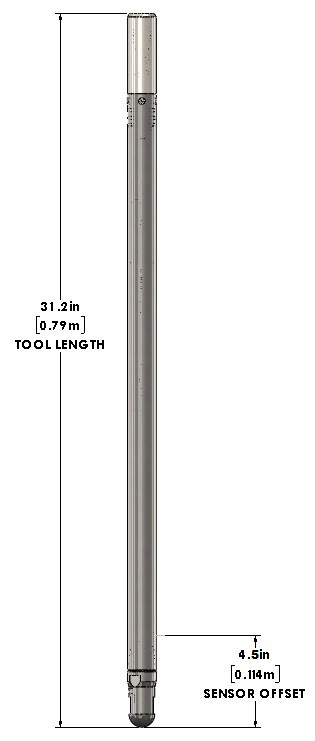
- Diameter: 31.75 mm 1.25 in
- Length: 79.12 cm 31.15 in
- Weight: 1.63 Kg 3.6 lbs
- Max. Temp.: 70ºC 158ºF
- Max. Pressure: 200 bar 2900 psi
- Sensor Nal(TL) Crystal: 1.27x3.81cm 1.5x0.5 in
Features & Benefits
- Versatile probe which functions with a wide range of applications and borehole conditions.
- New smaller diameter (32mm) allows for logging through push rods and BQ core holes.
- Tool can be calibrated to output gamma in API units or %wt U308 (percent weight uranium)
- Digital communications allowing for higher count rates in high grade ore bodies.
4-Pi and Gamma-Gamma density configurations
The 32GR tool can be run as a standalone tool or it can be adapted to carry a small radioactive Cs-137 source (generally 100 mCurie for most applications) for 4-pi density measurements. This density setup can be run normally in the borehole or decentralized with the use of a bow spring assembly to collect semi-quantitative (when calibrated) density information of the material surrounding the borehole. It is most commonly used to assess the integrity of media surrounding small diameter access tubes in highway construction piles, diaphragm walls and other infrastructure and geotechnical works. Logs of density in lbs/ft3 or g/cm3, can be generated in real-time.